

Cleaning Validation in the Pharmaceutical Industry
Abstract
Equipment cleaning is a discipline that demands extensive chemical, toxicological, pharmacological, and process engineering expertise. Only through the collaboration of all technical disciplines can a procedure that is as economical as possible yet reliable be established and validated for multipurpose facilities. This article will discuss chemical, toxicological, and pharmacological aspects for the planning and design of the cleaning process, as well as the process engineering evaluation of bracketing and sampling.
1 Introduction and History
The foundation for the necessity of cleaning validation was laid with the introduction of penicillins. The FDA “Guide to Inspections – Validation of Cleaning Processes” 7/93 [5] states that most product recalls were caused by cross-contamination from penicillins. Regarding cleaning, inadequate hygiene and a lack of dust control were further reasons for authorities to establish regulatory provisions. The FDA Guide, dating from 1993, contains all essential principles of cleaning validation. The guide refers to the manufacturing processes of the chemical and biotechnological pharmaceutical industries. The reasons for the creation of this guide stem from previously occurring scandals, such as pesticide residues in medicines and insufficient evidence for the absence of residues in a multi-purpose facility where steroids were also manufactured.
Today, every cleaning validation must include a risk-based assessment of all substances that could enter the subsequent product. This includes residues of active pharmaceutical ingredients (APIs), cleaning agents, and potential degradation products. To prevent possible cross-contamination in the subsequent product, acceptance criteria are defined. These are established in a risk-based manner for each individual API in a multi-purpose facility, in accordance with ICH Q9 [9]. Acceptance criteria for microbiological limits are not specified, but microbiological aspects are mentioned in relevant regulations and recommendations such as the FDA Guide [5], EU-GMP Guide, Annex 15 [4], and PIC/S [11].
2 Limit Values
for Residues of Products, Cleaning Agents, and Potential Degradation Products
With the 2015 revised Annex 15 EU GMP Guide, a new approach for considering potential residues was published. With these innovations, the previous acceptance criteria for product residues, the 1/1000 dose criterion, and the 10-ppm quantity criterion can no longer be used alone. Instead, the applied criterion should be based on a risk assessment of the contaminants, which, in addition to toxicological considerations, also includes the evaluation of pharmacological and physicochemical properties (e.g., solubilities). The previous limit values are to be replaced by the science-based limit for daily exposure, PDE (Permitted Daily Exposure), or a TTC (Threshold of Toxicological Concern) value. This must be determined for each individual active ingredient and each cleaning agent. For generic active ingredients, the determination of these values can be done by commissioning the creation of a corresponding expert opinion.
If the values are not available, for example, for new developments, pharmaceutical manufacturers have the option of applying the quantity or dose criterion in conjunction with the OEL (Occupational Exposure Limit) value. For this, the manufacturer must demonstrate that the previously used criterion is greater than or equal to the respective OEL value of the active ingredient, including consideration of the route of exposure. The OEL value represents a limit value derived from toxicological data.
Reasons for these innovations include, firstly, that the dose and quantity criteria were chosen arbitrarily without risk-based approaches and lacked a scientific basis. The differing therapeutic indices of medicinal substances were not considered. Furthermore, the therapeutic dose is proportional to the residue, which leads to high product residues for highly dosed substances. In addition, long-term intoxications and teratogenic toxic effects must be included in the risk assessment.
2.1 PDE Criterion
PDE (Permitted Daily Exposure) describes the dose of a substance at which no negative effect is observed with daily intake over the entire lifespan. The acceptance criterion is based on scientific data such as clinical or toxicological studies and includes a risk assessment. ADE (Acceptable Daily Exposure) is a synonym for this criterion. The dose calculation is performed based on toxicological studies according to the EMA “Guideline on setting health based exposure limits for use in risk identification in the manufacture of different medicinal products in shared facilities” [3].
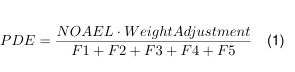
- PDE: Permitted Daily Exposure [mg/day]
- NOAEL: No Observed Adverse Effect Level [mg/(day kg)] Weight Adjustment = Standard Body Weight 50 kg
- F1: Factor for extrapolation between species (2-12)
- F2: Factor for distinguishing between species (10)
- F3: Factor for calculating short-term/long-term studies
- F4: Factor for severe toxicity
- F5: Variable factor if NOAEL is unknown, but PDE is derived from LOEL (Lowest Observed Adverse Effect Level).
If the NOAEL is not available, the LOAEL (Lowest Observed Adverse Effect Level) can be used. For product-specific equipment (dedicated equipment), there is no general validation obligation regarding active ingredient residues. However, an assessment of possible degradation products, cleaning agent residues, and microbiological contaminations must be carried out.
Based on a risk assessment, it should be weighed whether a multi-purpose or product-specific facility can be used for the manufacture of medicinal products. When determining the PDE, it must be considered that the route of administration of the subsequent product must be known and included in the PDE calculation. For subcutaneous administration, for example, a higher PDE can be tolerated for many local anesthetics than for intravenous administration.
Cleaning equipment after use often requires the addition of cleaning substances. These can also impair patient health by exerting their own toxic effects or by affecting the efficacy of the subsequent medicinal product. Therefore, a limit value must be determined for active ingredients, excipients, and cleaning agents. As with active ingredients, this limit value must be achievable and measurable. For a cleaning routine consisting of several steps, the analytics should refer to the last-to-rinse substance. In any case, the composition of the cleaning agent must be known, and the supplier must provide a long-term guarantee for the formulation. Surfactants are typically used as cleaning agents, but a sequence of acids, alkalis, and complexing agents is also common.
Once the PDE for the planned subsequent application has been determined, the maximum permissible residue quantity MZR (=MACO) must be calculated for all residues (products, degradation products, cleaning agents).
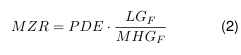
- MZR: Maximum permissible (cleaning agent) residue
- LGF: Batch size of the subsequent product (worst case)
- MHDF: Maximum human therapeutic (daily) dose of the subsequent product = Frequency of intake x Mass of dosage form
Known chemical structures with unknown toxicities can be assessed according to Allhenn and Anhalt [1] using the TTC concept (Threshold of Toxicological Concern). (6) Genotoxic substances or substances with sensitizing potential cannot be defined via the TTC value. For these, the PDE value or the “Limits of Genotoxic Impurities” [1] must be used.
2.2 GRAS Status
For substances that have GRAS status (generally regarded as safe) according to CFR 21 Part 184 [12] and for which no known PDE exists, the PDE for residual solvents with low toxic potential, PDE = 50 mg, can be applied analogously to ICH Q3C [10].
2.3 10-ppm Criterion
If the toxicity of the substances is very low or harmless substances are used, it is still advisable to define a “best practice” limit value. In this case, the 10 ppm criterion is recommended as a technically feasible limit. A maximum of 10 ppm of the preceding product may be carried over into the subsequent product. This results in a maximum residue value mmax for the contamination of the subsequent batch:
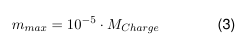
- mmax: Acceptance criterion / max. permissible residue of the preceding product [mg]
- MCharge: Minimum batch size of the subsequent product [kg]
The 10 ppm criterion originated in the food industry and does not consider the toxicological or pharmacological properties of the substance. However, it remains a useful criterion for calculating a limit for toxicologically harmless substances.
2.4 The 1/1000 Dose Criterion
Even if the toxicological criterion must be considered when calculating the maximum residue quantity, Annex 15 requires that pharmacological properties and thus also the dosage be included in the risk assessment [4]. Therefore, the usual dosage of the subsequent product should still be determined and included in the discussion of the limit value.
In the past, the usual or minimum dosage was used as the basis for calculating the limit value with a fixed risk factor. The daily dose of the subsequent product was not allowed to contain more than one thousandth of the lowest therapeutic daily dose of the preceding product. Based on the smallest possible batch size and the equipment surface area, the maximum permissible residue quantity that may transfer from the product-contacting surface to the next batch is obtained:
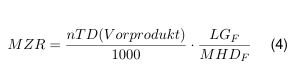
- MZR: Maximum permissible (cleaning agent) residue
- nTD: Lowest therapeutic dose of the preceding product [mg/d]
- LGF: Batch size of the subsequent product (worst case)
- MHDF: Maximum human therapeutic (daily) dose of the subsequent product = Frequency of intake x Mass of dosage form
2.5 “Visually-Clean” Criterion
The equipment surface must be visibly clean. This requirement generally applies to cleaning validation. However, quantifying the observation “clean” is difficult. The attempt to quantify the criterion for visual inspection was empirically determined by means of “spiking” studies (dilution levels) for a group of substances. The limit value at which the investigated substances were visually detectable is approximately 4 µg / 100 cm² [6]. Since this value was tested for only a few products, it cannot be transferred to all products. A manufacturer must demonstrate through their own “spiking” studies at what concentration a product can just barely be visually detected. The test surface properties must correspond to the quality of the equipment surface from production. Furthermore, products with strong coloring properties pose a problem in assessing visual cleanliness. It is recommended to evaluate the harmlessness of dyes as part of a risk analysis and, if necessary, include the corresponding products in the cleaning validation.
The “Visually-Clean” criterion considers neither the batch size nor the equipment surface area. Therefore, this criterion must always be considered in conjunction with the PDE criterion and, if applicable, the 10-ppm criterion, and cannot be used as a sole criterion.
2.6 Worst-Case Concept
After determining the limit values, the knowledge of the PDE (and other limit values, if applicable) is used to calculate a product-dependent limit value. A worst-case scenario of preceding product/subsequent product can then be determined for the entire product spectrum, and this limit value can be considered for the entire cleaning validation. This limit value must be verifiable, meaning a validated analytical method must be able to detect this limit value. When manufacturing new products on the facility, the validity of the worst-case scenario must be checked. For highly potent active ingredients and medicinal products such as steroids, antibiotics, and cytostatics, the risk assessment indicates that these products must be manufactured with “dedicated equipment,” for example, because a determined limit value is below the analytical detection limit or the authority requires this for certain product groups.
2.7 Transition from Dose Criterion to PDE
If cleaning validation was established before 2015, the limit values established in the past had to be questioned and adjusted since then. In some cases, better cleaning procedures must be established, while in others, the previous limit value is stricter. A relaxation of already established limit values is not acceptable, as a technically achievable quality of cleaning must be maintained.
A toxicological assessment of the local anesthetic “Bupivacaine” by DPhE [8] yielded different consequences for cleaning validation, depending on the route of administration of the subsequent product. Two facilities were considered. To derive measures regarding cleaning validation, an evaluation quotient is used, derived from the old 1/1000-dose criterion and the new PDE.
Facility A: The subsequent products are exclusively administered subcutaneously. The evaluation quotient is 0.2. No measures are required.
Facility B: The subsequent products are mostly administered intravenously. The evaluation quotient is 3.9. Cleaning must be improved, and cleaning validation must be performed again.
3 Microbiological Limit Values
While the consideration of product and cleaning agent residues focuses on preventing cross-contamination and carry-over from the preceding product and cleaning process, the consideration of microbial count relates to monitoring and preventive measures. Such measures include, for example, that equipment must be kept dry after cleaning. The times between the end of production and the start of cleaning, known as “dirty-hold time,” not only influence cleaning but also microbial load, which plays a particular role in sterile manufacturing, for instance. Similarly, the hold times between the end of cleaning and the start of production must be validated. These conditions influence microbial growth. The limit values for microbial counts on surfaces can be derived from the requirements of Annex 1 of the EC-GMP Guide [2] for sterile medicinal products. Further guidance regarding the microbiological purity of medicinal products can be found in the specifications of the respective pharmacopoeias. For phytopharmaceuticals, the European Pharmacopoeia provides guidance on the microbial purity of crude drugs at various processing stages. Thus, in this case, microbiological limit values for cleaning validation can be derived from product requirements.
Sterile manufacturing holds a special position here. Although the sterility of the equipment is proven by the validation of sterilization processes, it cannot yet be ensured that pyrogens or endotoxins have been eliminated. From this perspective, microbiology must also be considered within the scope of cleaning validation and hold time validation of cleaning procedures in sterile manufacturing [5, 11].
4 Equipment Design
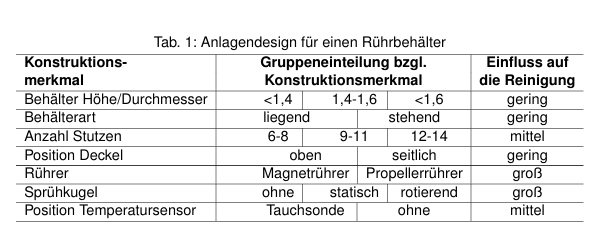
With the help of a risk analysis, the influence of product, equipment, and process-related parameters on the cleaning objective should be evaluated. To reduce the effort of cleaning validation, a grouping, known as “bracketing,” can be performed through a similarity assessment regarding the design of the equipment and products with comparable chemical-physical properties. This means that similar products and processes do not have to be validated individually. Possible criteria for forming groups will be illustrated with an example of a stirred tank (see Table 1).
In this example, the focus was placed on design features that significantly impact cleaning. This allowed for a risk-based rationale for grouping equipment with different design features. In the next step, the worst-case vessel within each group is identified, and cleaning validation is performed using it. For a successful cleaning process, easily cleanable components are essential. The hygienic design describes the cleaning-friendly design of equipment and its parts. Every product-contacting surface must be wettable by the cleaning agent and easy to dry. In the hygienic design of the equipment, the material and surface of the equipment also play a crucial role in cleanability. For example, massive cleaning problems can be caused by insufficient surface smoothness, unclean welds, unsuitable sealing constructions, and subsequent installations.
5 Cleaning Procedures
In addition to manual cleaning procedures, there is also the option of an automated cleaning procedure (CIP system). However, a CIP cleaning system is often not feasible and too expensive, which is why manual cleaning must be performed. This is significantly disadvantaged compared to the CIP cleaning system in terms of reproducibility and validateability. Manual cleaning is highly dependent on the individual performing it. Therefore, not only regular training and proper work motivation of personnel, but also the necessity of detailed instructions, planning, and supervision are crucial for cleaning success. The CIP system represents a continuous process that is reproducible and standardizable. The disadvantage is that the cleaning success is difficult to inspect due to the closed system. For visual control of cleaning success and sampling of cleaning water, sight glasses and sampling points would have to be planned. The cleanability of CIP systems can also be determined during qualification by measuring riboflavin residue. Riboflavin has good detectability and is also harmless. It must also be considered that many other steps, such as programming process parameters, access control, or data archiving, must be undertaken. CIP systems are stationary units that are permanently integrated into the production facility. All relevant processes and products in the production facility must therefore be adjusted to the system.
The critical measurement, control, and regulation units in the CIP system must be checked and regularly recalibrated. With the help of the spray ball installed in the CIP systems, the entire surface of the equipment is wetted with cleaning solution. The ball can be static or rotating. The flow rate of the cleaning agent must be adjusted via pressure to avoid atomization of the solution. Statically and dynamically occurring pressure losses can be avoided with a variably defined pump capacity.
Chemical Properties of the Cleaning Agent Often, water is used for rinsing to avoid cleaning agent analytics. The cleaning result is often poor, or a lot of water is consumed. Here, it is worthwhile to look at the chemistry of the substance to be cleaned. Sometimes a component (excipient) from the formulation in low concentration can be considered as a cleaning additive. The following effects, for example, can be used for cleaning in an aqueous medium:
- pH shift for ionizable active ingredients
- Increased salt content increases solubility of poorly soluble substances (activity is reduced)
- Solubilizers/emulsifiers from emulsion formulations
The advantage of this approach is that no additional components are added, and thus the equipment is not contaminated with additional chemicals that would then need to be detected.
6 Sampling
The cleaning validation plans must describe the sampling locations and provide a justification for their selection. Two recognized types of sampling are distinguished: direct and indirect sampling.
Direct sampling involves the swab test, where a defined surface is sampled with a suitable solvent using cotton swabs. The prerequisite here is the accessibility of the sampling points, which is also the main disadvantage: not the entire surface is sampled, and it cannot be assumed that the contamination is uniformly distributed in a facility. In addition, this type of sampling has low reproducibility. The advantage is that the analytical result can be directly assigned to a defined location in the facility. Poorly soluble residues can also be detected with the swab test.
Indirect sampling (rinse) is used for inaccessible or difficult-to-reach areas, such as pipelines, but also internal surfaces of vessels and built-in components. The disadvantage of this method lies in the uncertainty of whether all residues have been rinsed out, whether the residues are water-soluble, and whether removal occurs even in hard-to-reach areas. A significant advantage, however, is the ability to sample a large surface. Another general disadvantage of the rinse method is that the substances to be detected are highly diluted, making it difficult to analytically detect the calculated limit value. Another sampling option is the combination of both methods, e.g., sampling by swab at nozzles and subsequent rinse sampling of the entire interior. For both sampling methods, the recovery rate must be determined.
7 Analytical Methods
The success of a cleaning method must be demonstrated with analytical methods. The FDA “Guide to Inspections Validation of Cleaning Processes” [5] requires the specificity and sensitivity of analytical methods. It must always be noted that results below the detection limit do not mean that no residues are present in the sample. The result can only be as good as the sensitivity, specificity, and accuracy of the test. Therefore, analytical methods must be validated. The following analytical methods are commonly used in cleaning validation.
Specific Analyses
- HPLC
- GC
- Color Tests / Ready-to-Use Kits
- Color Reactions for Proteins (e.g., BCA)
Sum Parameters
- TOC
- Conductivity
- UV/VIS Spectroscopy
7.1 Analytics for Products
HPLC/GC Analysis: While the advantage of specific analysis certainly lies in its specificity for a particular substance (active ingredient or marker substance), this method is only applicable in the chemical industry for end products, or only for the step in which the active ingredient was synthesized. Therefore, as the FDA Guide already emphasizes, a specific analysis is not practical in active ingredient production.
Specific methods have the advantage that specific products / cleaning agent components can be detected. The disadvantage, however, is that for some cleaning procedures, chemical degradation may prevent the actual previously present quantity from being detected. In such cases, a less specific determination of a sum parameter can be used for cleaning validation analytics.
If the cleaning process degrades the active ingredient, as is the case, for example, when cleaning protein residues with sodium hydroxide solution, a risk analysis evaluating the denaturation processes, possibly combined with a depletion study, may suffice.
7.2 Limits of Measurement Methods
When acids or alkalis are used as cleaning agents (additives), the sum parameter conductivity is often used as a measurement criterion for the depletion of the cleaning agent. This raises the following questions:
- What is the significance of this measurement method here?
- If rinsing is performed with Purified Water until the conductivity of Purified Water is reached again, have all cleaning agent residues been removed to an acceptable level?
Here, the limits of this measurement procedure must be considered and interpreted accordingly in advance. The following example calculation illustrates the limits of the procedure. From the tables [7], the detectability of acids and alkalis is derived from their conductivities and the maximum expected blank value from the limit for the conductivity of Purified Water. A concentration limit value that is smaller than the concentration resulting from the assumption that the entire conductivity at the Purified Water limit value originates from the cleaning agent is considered unusable. As an example, an NaOH concentration in WFI will be calculated. For Water for Injection, the conductivity limit at 20°C is 1.1 µS/cm. The conductivity of NaOH in a 0.5% solution is 24.8 µS/cm. This results in a residual NaOH concentration in WFI of 0.22 mg/L, which corresponds to a pH value of 8.7 and thus violates the WFI specification, making it unsuitable as a detection criterion. The often-used method of “filling the vessel” would involve excessively large liquid volumes, and the significance of the conductivity measurement would not be given. Slightly better detection limits can be achieved by rinsing with water of lower conductivity and following the procedure below.
- Measure the blank value of water from the current rinse cycle
- As a comparison value: use cleaning solution diluted to the limit value with rinse water.
8 Validation
As in any validation, data from several past runs must be used for validation. Typically, one begins with the evaluation of three runs and expands the data basis with regular, planned revalidation runs. Hold times, which should be oriented towards the planned production schedule, must also be included in the validation planning. Since 2015 [4], it has been permissible to market the produced batch after the first validation run with verification of cleaning success. This particularly facilitates investigational medicinal products.
9 Conclusion
Cleaning validation is more than just “rinsing”; it requires careful consideration and evaluation of individual steps and their performance, and demands a high degree of interdisciplinary knowledge.
References
1
ALLHENN, D; ANHALT, E: Selection of Acceptance Criteria for Cleaning Validation of Multipurpose Facilities. In: Pharm. Ind. 77 (2015), No. 7, pp. 1074–1080
2
EUROPEAN COMMISSION: EU Guidelines to Good Manufacturing Practice, Volume 4, Annex 1: Manufacture of Sterile Medicinal Products. 2008
3
EUROPEAN MEDICINES AGENCY: Guideline on setting health based exposure limits for use in risk identification in the manufacture of different medicinal products in shared facilities. 2014
4
EUROPEAN COMMISSION: EU Guidelines to Good Manufacturing Practice, Volume 4, Annex 15: Qualification and Validation. 2015
5
FOOD AND DRUG ADMINISTRATION: Guide to Inspections – Validation of Cleaning Processes, 1993
6
FOURMAN, G L.; MULLEN, M: Determining Cleaning Validation Acceptance Limits for Pharmaceutical Manufacturing Operations. In: Pharmaceutical Technology (1993), No. 4, pp. 54–60
7
HAYNES, William M. (Ed.): CRC Handbook of Chemistry and Physics. 91. Baca Raton, FL, 2010
8
HEBENBROCK, K; HRACH, J: Internal Report DPhE: Toxicological Assessment of Bupivacaine – Determination of PDE. 2015
9
ICH: Technical Requirements for Registration of Pharmaceuticals for Human Use: Q9 – Quality Risk Management. 2004
10
ICH: Technical Requirements for Registration of Pharmaceuticals for Human Use: Q3C Impurities: Guideline for Residual Solvents. 2018
11
PIC/S: Validation Master Plan, Installation and Operational Qualification, Non-Sterile Process Validation, Cleaning Validation. 2007
12
US FOOD AND DRUG ADMINISTRATION: Code of Federal Regulations Title 21, PART 184 DIRECT FOOD SUBSTANCES AFFIRMED AS GENERALLY RECOGNIZED AS SAFE.– URL https://www.accessdata.fda.gov/ scripts/cdrh/cfdocs/cfcfr/ CFRSearch.cfm?CFRPart=184